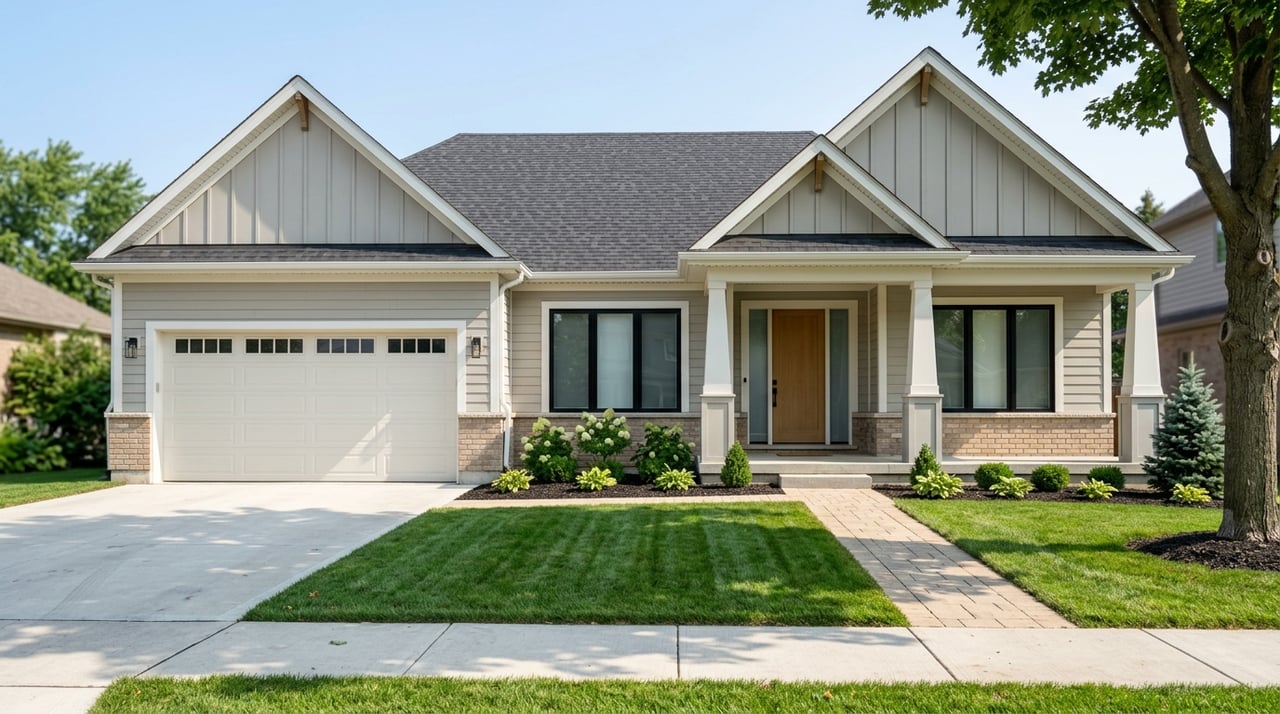
Highland Park vs Mac-Groveland: How To Choose Your Fit
June 4, 2026
June 4, 2026
Trying to choose between Highland Park and Mac-Groveland can feel harder than it should. Both are well-known St. Paul neighborhoods with walkable areas, access to the Mississippi River, and a strong sense of place. If you are comparing the two, the real question is usually not which one is better, but which one fits how you want to live day to day. Let’s dive in.
Highland Park and Mac-Groveland are both shaped by walkability, but they center daily life in different ways. Highland Park is bounded by Randolph Avenue, the Mississippi River, and I-35E, and the City of St. Paul describes it as a walkable urban community with strong commercial centers, parks, and open spaces.
Macalester-Groveland, often called Mac-Groveland, is bounded by Summit Avenue, Ayd Mill Road and I-35, Randolph Avenue, and the Mississippi River. Its neighborhood plan describes it as a connected, walkable, mixed-use neighborhood with a pedestrian-oriented, human-scale streetscape.
In simple terms, Highland Park often feels broader in footprint and more spread across several activity areas. Mac-Groveland often feels more tied to its mixed-use street grid and neighborhood corridors.
Highland Park has about 12,000 homes and is nearly split between single-family and multi-family housing. City planning documents point to a wide range of housing types, including single-family homes, duplexes, triplexes, accessory dwelling units, mixed-use buildings, and larger residential buildings.
That broader mix can matter if you want more than one path into the neighborhood. You may be comparing a condo, townhome, traditional house, or newer housing option depending on your goals and budget.
The area also includes historic streetcar-era nodes like Highland Village and Snelling-Randolph, along with newer and evolving corridors such as Shepard-Davern and the Ford area. For many buyers, that creates a neighborhood feel that blends established blocks with visible change and redevelopment.
Mac-Groveland has a different residential rhythm. Its neighborhood plan highlights a rich mix of single-family homes and apartments, with strong cores of well-maintained pre-World War II single-family homes and duplexes bordered by multi-family buildings.
The plan also notes that commercial nodes are surrounded by homes largely built from the 1900s through the 1930s. Outside mixed-use corridors, the neighborhood plan explicitly preserves lower-density homes and duplexes.
For you as a buyer, that often translates to a more consistent historic feel from block to block. If you are drawn to older homes, lower-scale residential streets, and a more uniform architectural character, Mac-Groveland may feel like the more natural fit.
Highland Park stands out for the range of amenities packed into one area. The Highland Park Community Center combines recreation and library services, with programs, meeting and study rooms, a teen zone, fitness access, athletics, family events, and rental space.
Next door, the larger Highland Park facility includes an aquatic center, 18-hole and 9-hole golf courses, disc golf, picnic areas, playgrounds, a sledding hill, and Circus Juventas. The neighborhood plan also prioritizes practical daily-needs businesses such as grocery, hardware, and pharmacy.
If your ideal routine includes easy errands plus major recreation options close to home, Highland Park has a strong case. It can be especially appealing if you want neighborhood amenities to cover both weekday needs and weekend activities.
Mac-Groveland’s everyday lifestyle is more corridor-based. The neighborhood’s activity centers are closely tied to Grand Avenue and Snelling Avenue, where the city is supporting business vitality with mini-grants, bike corrals, parklets, marketing support, streetscape work, arts programming, and community events.
Groveland Recreation Center adds another practical neighborhood amenity on St. Clair Avenue. At the same time, the Grand Avenue reconstruction between Fairview and Snelling may temporarily affect access while improving pedestrian crossings and space for people outside of vehicles.
If you picture your daily life around neighborhood storefronts, mixed-use streets, and a tighter commercial grid, Mac-Groveland may feel more intuitive. It often suits buyers who want their routine shaped by the avenue rather than a larger park campus.
Both neighborhoods connect to the Mississippi River, but Highland Park has the stronger official riverfront identity in its planning documents. The neighborhood plan calls for new open space and river access, improved bike and pedestrian facilities along Mississippi River Boulevard, and protection of river views.
The Ford area materials also reinforce that connection, with land stretching to the bluff edge near Mississippi River Boulevard and Gateway Park positioned as an entry point to surrounding Highland Park amenities. In practical terms, the river is not just nearby. It is part of how Highland Park is being shaped now and into the future.
Mac-Groveland also borders the Mississippi River on its west edge. But its main commercial nodes sit farther inland around Grand and Snelling, so the neighborhood’s daily center of gravity is generally more tied to the street grid than to the river edge.
That does not mean outdoor access is limited. It simply means the neighborhood experience often feels more avenue-centered and less river-centered in everyday use.
Highland Park is anchored by the A Line bus rapid transit corridor on Snelling Avenue and Ford Parkway. Route 74 also connects Highland Park with downtown St. Paul, south Minneapolis, and Maplewood.
For buyers who want transit access paired with major recreation and service amenities, that combination can be a meaningful advantage. Highland Park also has I-35E along its east edge, which shapes how many residents move through the city by car.
Mac-Groveland is anchored by Route 63 on Grand Avenue, serving St. Thomas, Grand Avenue, Macalester, downtown St. Paul, and Sun Ray Transit Center. The Snelling and Grand station also connects into the A Line network, helping tie the neighborhood into the broader transit system.
By car, Mac-Groveland is framed by Ayd Mill Road and I-35 on its east side. In day-to-day terms, Highland Park often feels more oriented to Ford, the river, and Snelling, while Mac-Groveland often feels more oriented to Grand, Snelling, and cross-town movement.
If you are still torn, it helps to focus less on labels and more on patterns. The best fit usually comes down to the kind of home, routine, and surroundings you want most.
Highland Park often appeals to buyers who want flexibility. It can also be a strong match if you are open to newer housing options or want to be close to the Ford area and major park amenities.
Mac-Groveland often appeals to buyers who want a classic prewar neighborhood feel. If your ideal day includes walking to neighborhood businesses along a compact corridor, this area may feel especially comfortable.
When buyers compare these two St. Paul neighborhoods, the most useful question is often this: do you want historic prewar character and compact corridor life, or a more varied housing mix with stronger park and riverfront amenities?
That question will usually narrow the choice faster than comparing every feature one by one. It gets to the heart of how each neighborhood functions in real life.
As a family-rooted team based in Highland Park, The Distad Team knows how much these small differences matter once you start touring homes and imagining your routine. If you want help comparing blocks, housing options, or current opportunities in either neighborhood, The Distad Team is here to help.
Stay up to date on the latest real estate trends.

Ready to get started? Reach out today and take the first step toward achieving your real estate goals!