The Governor Moved to Sunfish Lake. The Market Data Still Doesn't Add Up.
September 17, 2026
In the spring of 2023, Minnesota's first family needed somewhere to live while the Governor's Residence on Summit Avenue underwent a $6.3 million renovation. The state signed an 18-month lease on a five-bedroom, nearly 8,000-square-foot home on a 3.5-acre lot in Sunfish Lake, the small city just south of West St. Paul, at $17,326 a month. The arrangement made headlines for months, partly because of the price tag and partly because the homeowner was a former Republican Senate candidate housing a Democratic governor. It also did something quieter: it put a real, dated, verifiable number on a market that almost never produces one.
That matters more than it sounds like it should, because if you've been comparing Sunfish Lake to Mendota Heights or Eagan using the median price you saw on a listing site, you've been reading a number that doesn't mean what it looks like it means.
Here's what shows up if you track Sunfish Lake's reported median sale price over the past two years. In October 2024, one read of the market put the median at $1.6 million, a drop of roughly 31 percent from the year before. A month later, a different snapshot showed a median of $1,450,000, down nearly 18 percent year over year, with only five homes on the market. Fast forward to the three months ending in May 2026, and the reported median had jumped to $2.0 million, up 105.9 percent from the same period the year prior.
Three separate readings, two pointing down and one sharply up, all within about eighteen months.
If Eagan or Mendota Heights posted numbers like that, it would be a story. In a market that sells hundreds of homes a year, a median swinging 100 percent in either direction would mean something structural had changed. In Sunfish Lake, a city with roughly 520 residents and a housing stock small enough that a national portal counted 32 active listings across the entire city as of this August, it means something much simpler: the number is being decided by whichever handful of homes happened to close, not by anything happening to the broader market.
A median is only a useful signal when enough transactions feed into it that no single sale can tilt the whole number. In a market the size of Minneapolis or St. Paul, one expensive closing gets absorbed into thousands of others. In Sunfish Lake, a single $6 million lakefront sale can drag the median up by hundreds of thousands of dollars in a quarter where only four or five other homes changed hands. A run of smaller 1970s ramblers selling in the same window can just as easily drag it back down.
This isn't a flaw in any one data provider. It's a mathematical consequence of a market this thin. One national portal's transaction history for Sunfish Lake lists 39 total recorded sales, not per year, but as the running record of recent activity the platform could find at all. Compare that to a single month of closings in a city like Eagan, and the difference in sample size explains the difference in volatility better than any theory about buyer demand or interest rates.
The practical takeaway: when you see a year-over-year swing on a Sunfish Lake listing page, you are not looking at appreciation or depreciation. You are looking at sampling noise dressed up as a trend line.
If the median doesn't tell you what a home actually costs here, the city's own zoning code does a better job. Sunfish Lake was incorporated as a village in 1958 with an explicit, stated goal of maintaining a rural atmosphere through large lot sizes and minimal disturbance of the natural environment. That goal was never softened. Today the minimum lot size for new construction is 2.5 acres of buildable land, the entire city outside of four churches is zoned single-family residential, and there is no commercial district at all. Homeowners provide their own water through wells and manage their own waste through septic systems, because the city has never built out municipal sewer or water service.
City government itself is sized to match: two employees, a City Administrator/Clerk and a City Treasurer, run the day-to-day operations for the whole city. A 22-acre parcel donated by the late Betty Musser is held under a conservation easement with the Minnesota Land Trust, and the city's comprehensive plan, approved by the Metropolitan Council, is built around preserving that green space in perpetuity rather than opening it to future development.
None of that is market sentiment. It's policy, and it's been consistent for close to seventy years. Scarcity in Sunfish Lake isn't a temporary supply crunch that a building boom could fix. It's engineered into the city's founding documents, which is a very different kind of scarcity to price into a long-term purchase than the kind you find in a neighborhood where the next subdivision is one rezoning vote away.
Instead of the median, the more useful lens is the price band a given home falls into, because those bands have stayed fairly consistent even as the reported median has bounced around.
| Home type | Typical price range | What defines it |
|---|---|---|
| 1970s contemporary | roughly $800,000 to $900,000 | Original-era construction, grassy lawns, wooded lots, not on the lake |
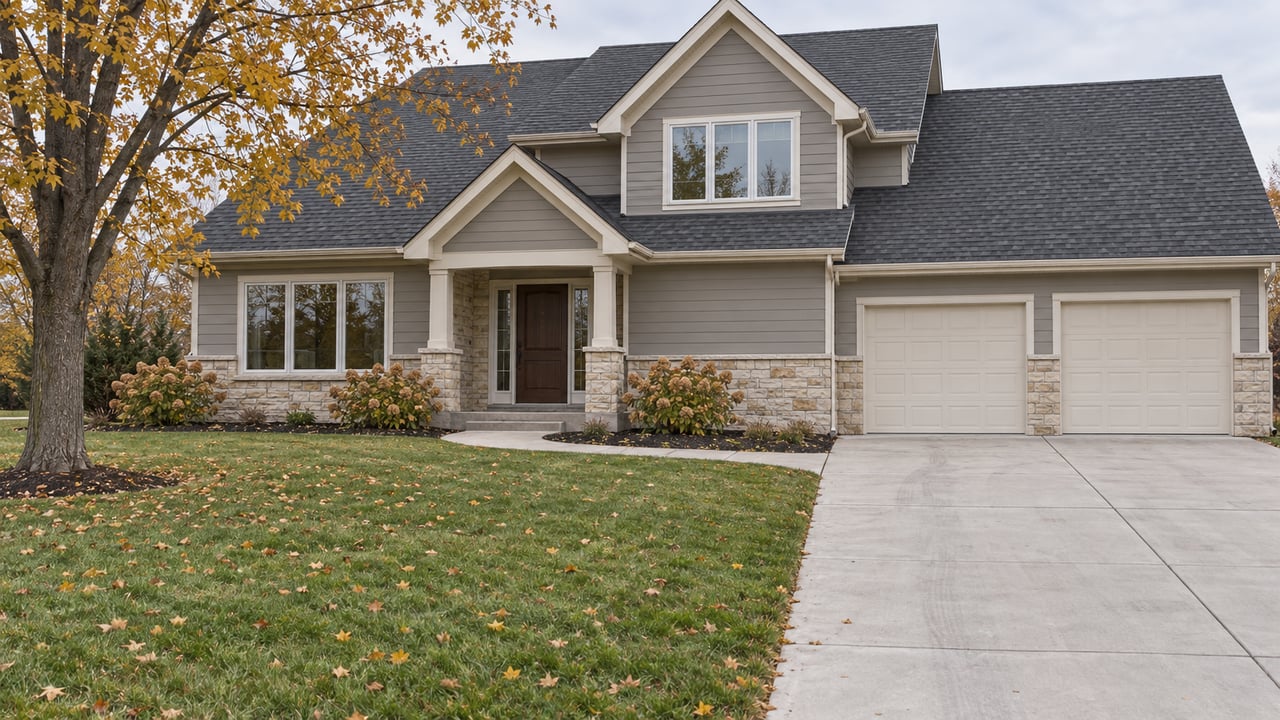
| Gated subdivision, newer construction | roughly $1 million to $2.7 million | Polished lawns, long paved driveways, built within the last few decades |
| Waterfront and lake-adjacent estates | roughly $3 million and up | Direct or near lake frontage, often custom-built |
Active listings this September bear that out. Homes currently on the market range from just above $1.2 million to just under $6 million, with the highest prices attached to properties on multi-acre wooded or lakeside lots and the lower end occupied by smaller homes on the city's original, non-gated lots. That spread is the real story of what money buys in Sunfish Lake, and it has held up across a period where the reported median has told three contradictory stories.
If you're comparing Sunfish Lake to a neighboring city like Mendota Heights or Eagan using headline price trends, you're comparing a statistic built on hundreds of sales to one built on a handful. Weigh the comparison accordingly, and put more trust in the price bands above than in whatever year-over-year percentage a portal displays this month.
Budget for the parts of ownership the zoning code makes non-negotiable. There's no municipal water or sewer bill here because there's no municipal water or sewer system. Wells and septic systems are part of ownership here, and that's a real cost difference from a home in a city with utility hookups.
Watch the city's own communications, not just portal data. In August 2026, the city posted a notice to residents about budget pressures likely to affect 2027 property tax bills, a reminder that a two-person city government still has to fund roads, water quality work with the Lower Mississippi River Watershed Management Organization, and basic services out of a very small tax base. That's a detail a buyer comparing carrying costs across cities should factor in directly, not infer from a median sale price.
And if you're the kind of buyer this market is built for, someone drawn to 2.5-acre lots, well water, and a comprehensive plan that has protected green space since before most of the surrounding suburbs existed, know that you're buying into a structural scarcity that isn't going anywhere. The zoning that keeps the median noisy is the same zoning that keeps the character of the place intact.
Is Sunfish Lake actually more expensive than it looks on paper? It depends entirely on which home you're looking at. A 1970s contemporary on a standard lot and a new-construction estate in a gated subdivision can carry price tags $1 million or more apart, all within the same small city. The median blends both into one number that describes neither well.
Why did the reported median jump so much between 2024 and 2026? Most likely because a different mix of homes sold in each period, not because values across the whole city moved that fast. With only a handful of transactions feeding the calculation, a shift toward larger or waterfront sales in one stretch can look like dramatic appreciation even when smaller comparable homes haven't moved in price at all.
Does the lack of city sewer and water affect resale value? It affects carrying costs more than it affects the ability to sell. Well and septic systems are standard across the entire city, buyers here expect them, and lenders and inspectors are familiar with evaluating them. The bigger factor for value remains lot size, lake access, and the age and condition of the home itself.
If you're weighing Sunfish Lake against another east metro city, or trying to figure out what a specific property is actually worth against comparable sales rather than a blended median, that's exactly the kind of read where local, hands-on experience matters more than another portal refresh. The Distad Team has spent decades reading Twin Cities markets property by property, not just headline by headline. Schedule a Consultation and let's look at what your money actually buys here.
This article is general information, not legal, tax or financial advice. Consult a qualified professional about your situation.
Stay up to date on the latest real estate trends.

Ready to get started? Reach out today and take the first step toward achieving your real estate goals!