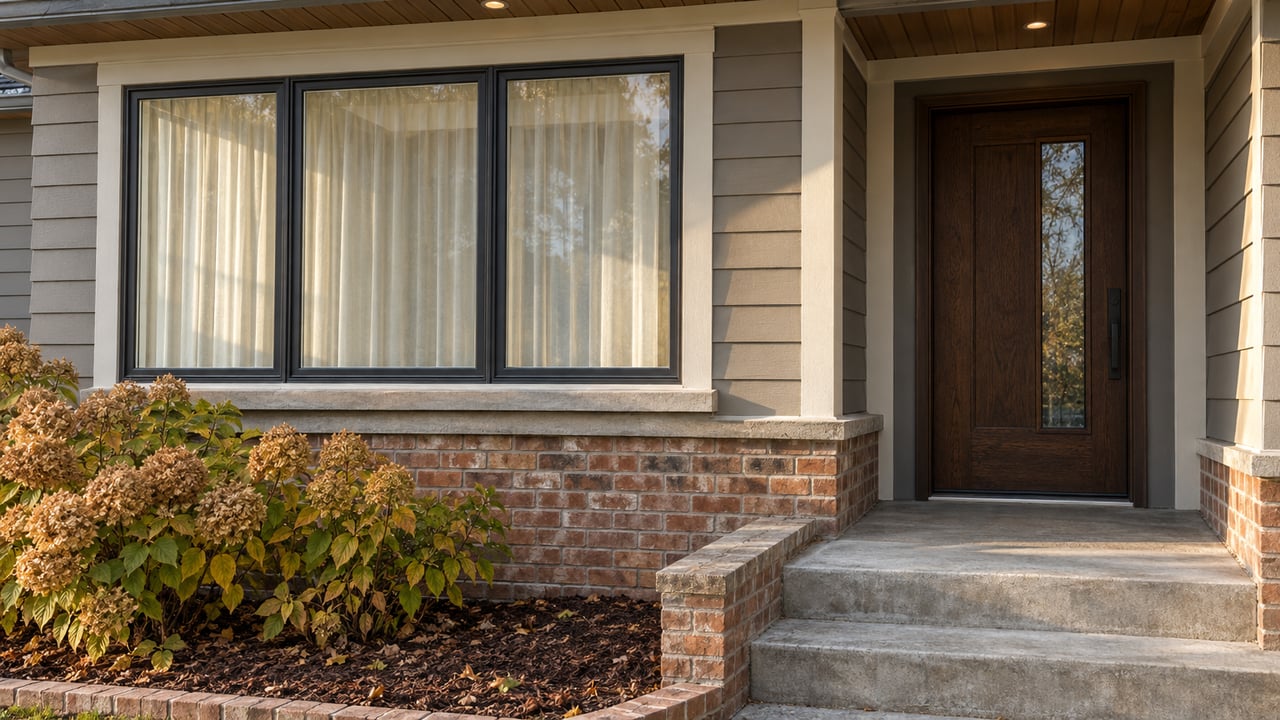
In Minneapolis, the TISH Energy Page Keeps Working After Closing
October 22, 2026
Minneapolis has an acknowledgment of responsibility form for unfinished repairs in a Truth-in-Sale of Housing report.
Most of the negotiating happens around that form. The same report also includes an energy disclosure with a score from 0 to 100. The energy page can remain useful well into the first years of ownership: the City's 0% energy efficiency loan accepts a TISH Energy Disclosure report dated within three years of loan closing.
Minneapolis requires a TISH evaluation for single-family homes, duplexes, townhouses and first-time condominium conversions. The report must be displayed and available to buyers while the home is for sale. It's valid for two years and is tied to the owner named on it. The City's evaluations page sums this up as "two years, or one sale."
The seller hires a Minneapolis-licensed evaluator. Evaluators are private contractors and set their own prices. According to the City's evaluator guidelines, the report marks each finding with a code, and the code decides whether the item affects the deal:
TISH also doesn't evaluate asbestos, lead paint, formaldehyde or radon. When required repairs are finished and pass reinspection, the City issues a Certificate of Approval. The City's reinspection page says it charges no extra fee to reinspect permitted work. Evaluators set their own price to reinspect non-permit work, and licensed contractors charge for safety checks.
The City's energy disclosure page says the score rates a home on four things: attic insulation, wall insulation, single-pane windows without storms, and the heating system. Finance & Commerce reported on October 5 that the report also notes the type, age and condition of air conditioners, stoves and dryers, plus electrical panel capacity, though none of those affect the score. According to CEE's Matthew Douglas-May in that article, the score focuses on the building envelope and heating because space heating makes up 70% of a Minnesota home's energy use. Reports generated after April 17, 2025 also include electrification information.
Finance & Commerce's numbers show where the Minneapolis housing stock stands. The program began in 2020. More than 28,500 homes sold with an energy disclosure in its first four years, and the city's average score is 76. The disclosures found that two of three homes lacked adequate insulation and one in two had an old or inefficient heating system. A program review in the American Council for an Energy-Efficient Economy's July 2025 report breaks it down a little differently. It found inadequate insulation in 65% of evaluated homes, inefficient heating in 40%, and single-pane windows in 6%.
In a typical Minneapolis sale, the buyer gets a report that identifies potential upgrades to the house.
The Minneapolis Energy Efficiency Loan, which the Center for Energy and Environment administers for the City, has two qualifying routes. One is a Home Energy Squad visit. The other is a TISH Energy Disclosure report dated within three years of the loan closing. The loan terms:
The City also adds bonus rebates on top of utility rebates through the Minneapolis Bonus Rebate program. Each project must qualify for an Xcel Energy or CenterPoint Energy rebate and be done by a contractor licensed or registered with the Minnesota Department of Labor. Funds are first come, first served. The City's bonus plus the utility rebate can't add up to more than the project cost. CEE sets the bonus cap at $20,000 for Green Zone residents and $6,000 for everyone else. The City's Green Cost Share page, last updated in February, lists $14,000 and $5,000. CEE's application is dated May 2026, but it's best to confirm the funded limit with CEE before building a budget around it. The City has a Green Zone map for checking an address.
Here's how a few of the items flagged on the energy page line up with CEE's published 2026 rebates:
| Improvement | Utility rebate | City bonus, Green Zone | City bonus, elsewhere |
|---|---|---|---|
| Attic insulation with air sealing, R-49 or as much as possible | $1,300 | Up to $3,000 | Up to $1,300 |
| Wall insulation, R-11 or as much as possible | $1,500 | Up to $3,000 | Up to $1,500 |
| Triple-pane windows replacing single pane | $0 | Up to $1,000 | Up to $500 |
| Cold-climate mini-split heat pump | $2,000 | Up to $5,000 | Up to $1,000 |
| Heat pump water heater | $400 | Up to $1,500 | Up to $400 |
| Electric panel upgrade with a qualifying heat pump or HPWH | $1,500 | Up to $3,000 | Up to $800 |
Most of the rows in that table are the same items the energy score measures.
Some of the funding behind those rows has an end date. Xcel Energy requires heat pump installations and invoices to be completed by December 31, 2026, and accepts applications through September 30, 2027. CenterPoint's heating system rebates cover equipment installed between January 1 and December 31, 2026, including $1,000 for a furnace rated 97% AFUE or higher.
CenterPoint's insulation rules are stricter than many buyers expect. Attic insulation alone earns no rebate. The $1,300 combined attic rebate requires air sealing, blower-door tests, a rebate-eligible installer, and raising insulation from R-30 or lower to R-49 or higher. The attic insulation line on a TISH energy report is where that work begins.
Owners do act on the report, just not right away. City sustainability coordinator Bjorn Olson told Finance & Commerce that homeowners with an energy score are "two to three times more likely" to go ahead with efficiency projects. He also said the City still sees people who bought in 2020 with a disclosure now taking out loans and rebates for the work. The same article reports 1,454 energy improvements by Minneapolis homes that had disclosures. That includes 1,018 high-efficiency heating systems and more than 436 insulation or air-sealing projects. The heating data ends in 2023, the year CenterPoint stopped funding the disclosure program.
Sellers sometimes ask whether a low score will cost them at the offer stage. The ACEEE report summarizes national research. A Portland study linked each added point on the Home Energy Score to about 0.5%, or roughly $3,000, in sale price. In Chicago, disclosing energy use and costs went along with shorter market times. ACEEE gives no sale-price or days-on-market estimate for Minneapolis, though. Its Minneapolis case study covers program operations and retrofit results. ACEEE also estimates that the energy disclosure added $25 to $100 to the cost of a TISH inspection.
What can be said locally is that the required-repair codes are what move money in a negotiation, because they come with deadlines and certificates. The energy page gives the buyer a work list and paperwork that can be used in a financing application. A separate Finance & Commerce article from October 7 cites national surveys. In them, 84% of recent buyers called energy efficiency at least moderately important, while about 8% of listings mention it. In Minneapolis, the TISH report puts that information in every listing file.
St. Paul's Truth-in-Sale of Housing page calls its report disclosure only. The report is valid for one year, or 365 days, and one sale by the named owner. Finance & Commerce identifies Minneapolis and Bloomington as the first two Minnesota cities to require energy disclosure at sale.
This post is general information about published City, utility and IRS rules, not legal, tax or financial advice. Confirm your own eligibility with CEE, your utility, and your tax or lending professional before you schedule any work.
If you're buying or selling in Minneapolis this fall, The Distad Team can go through the TISH report with you line by line. Schedule a consultation and bring the report.
Stay up to date on the latest real estate trends.

Ready to get started? Reach out today and take the first step toward achieving your real estate goals!