Trying to decide between a condo and a townhome in St. Louis Park? You are not alone. Both options offer location, convenience, and value, but the right fit depends on how you want to live, your budget, and how much maintenance you are comfortable handling. In this guide, you will learn how condos and townhomes differ in ownership, HOA dues, financing, inspections, and resale value, plus what matters most in St. Louis Park. Let’s dive in.
Key differences at a glance
Choosing between a condo and a townhome starts with how each one is owned and maintained.
Ownership and maintenance basics
- Condos: You typically own the interior of your unit plus a shared interest in common elements like the land, roof, and building systems. A homeowners association (HOA) manages and maintains common areas. Minnesota’s Chapter 515B common interest law governs how these associations operate.
- Townhomes: These can be structured several ways. Some are condo-style townhomes, while others are fee-simple homes within a PUD where you may own the land and exterior. The legal form affects who maintains the roof, siding, yard, and foundations, as well as how rules and assessments apply.
What you notice day to day
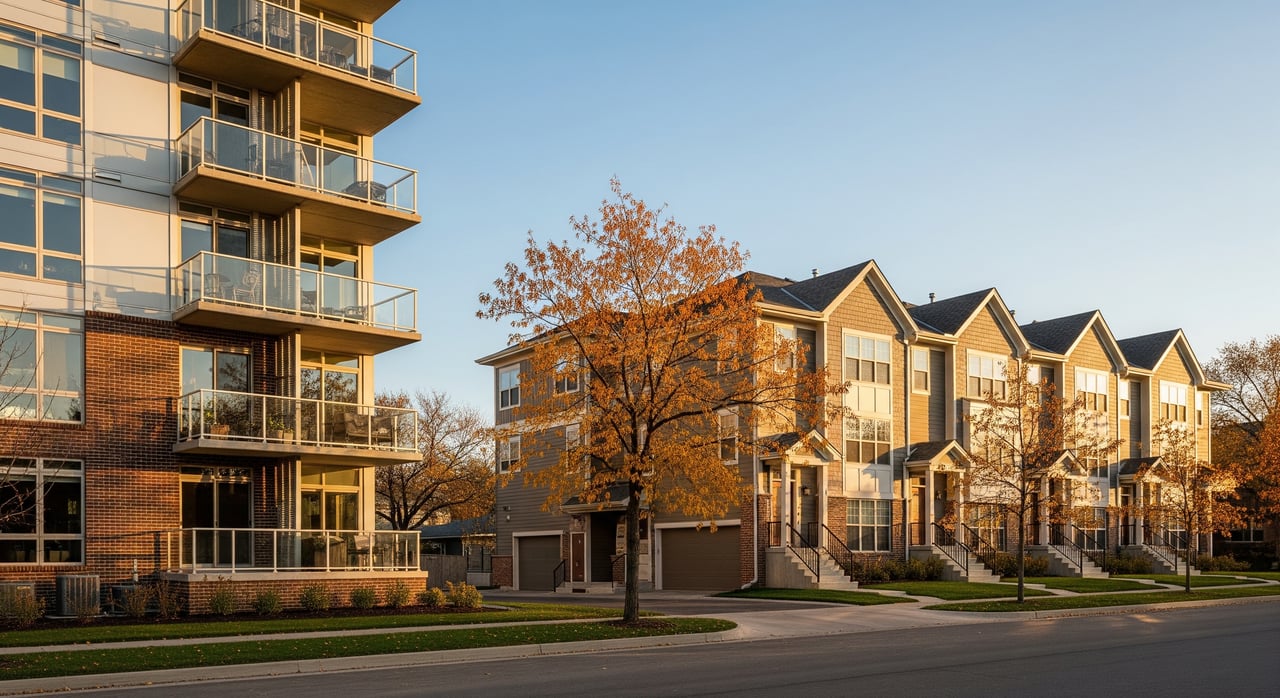
- Condos often provide more on-site amenities, shared systems, and centralized services with less private outdoor space.
- Townhomes often feel more like single-family homes with direct entry, private garage, and some private yard or patio, while still sharing walls.
St. Louis Park context
St. Louis Park sits just west of Minneapolis with quick access to major job centers, highways, and transit. You will find established retail and mixed-use hubs like the West End, a connected parks and trails network, and access to St. Louis Park Public Schools (ISD 283). Buyers often trade off more private outdoor space and exterior responsibility in a townhome versus lower hands-on maintenance and more amenities in a condo.
Market conditions for condos and townhomes can shift quickly. Inventory, days on market, and price trends vary by building and block. When you are ready to compare options, review current data through Northstar MLS and Minnesota REALTORS and verify parcel details through Hennepin County records.
Legal structure and who maintains what
The legal setup determines who pays for and manages major components. In Minnesota, Chapter 515B lays out the rules for condominiums and other common-interest communities.
- Condo-form ownership: The association typically maintains common elements like the roof, exterior, hallways, and shared systems. Your HOA budget funds these items through dues and reserves.
- Fee-simple townhomes in a PUD: You may be responsible for your roof, siding, and yard, while the association handles shared areas like private roads or landscaping. Read the declaration and rules to know your exact duties.
Tip: Always confirm where unit boundaries are defined in the deed. This shows whether exterior elements are part of your ownership or the association’s responsibility.
HOA dues, reserves, and risk
What you pay monthly matters to your budget and resale value. It also signals the community’s financial health.
- Budget and dues: Ask what your dues include. Common inclusions are exterior maintenance, snow removal, landscaping, trash, water, common utilities, building insurance, and sometimes heat. Request current dues, the last few years of increases, and any planned changes.
- Reserves and reserve study: Adequate reserves reduce the chance of large special assessments when roofs, siding, or parking lots need replacement. Review the latest reserve study and balance. The Community Associations Institute offers helpful guidance on reserve studies and best practices.
- Special assessments and litigation: Ask about any recent or planned assessments, deferred maintenance, or active legal issues. These items affect your cost of ownership and can impact financing and resale.
- Insurance: Confirm whether the master policy is “bare walls-in” or “all-in,” and note the deductible. Your agent and insurance provider can tailor your HO-6 or homeowner’s policy to fill gaps.
Financing factors that affect your options
Financing can be different for condos and townhomes, especially for certain loan programs.
- Project approval: FHA and VA loans may require project approval or a document review. If a condo project is not approved, some loan types may not work. Review guidance from HUD on FHA condo approvals.
- Conventional reviews: Conventional lenders follow rules similar to the Fannie Mae Selling Guide for project reviews. Lenders also look at association financials, reserves, owner-occupancy ratios, and litigation status.
- Owner-occupancy and rentals: Higher investor concentration can limit buyer pools and affect some loan choices. Confirm rental caps, waiting lists, and owner-occupancy percentages early.
What HOA fees often include
Dues vary by community, but in St. Louis Park you will commonly see some mix of the following:
- Exterior maintenance and common-area repairs
- Roofing, siding, and grounds upkeep
- Snow removal and landscaping
- Trash and recycling
- Water and sometimes heat or gas for common systems
- Building insurance on common elements
- Amenity maintenance such as elevators, fitness rooms, pools, or party rooms
Always verify which utilities are separately metered and how shared costs are allocated.
Lifestyle and location tradeoffs
Consider how you want to live day to day.
- Condos: Often include elevators, indoor parking, and on-site amenities. Lower personal maintenance can be appealing if you travel or prefer a lock-and-leave lifestyle.
- Townhomes: Often provide direct entry, private outdoor space, and attached garages. You may take on more exterior responsibility depending on the legal structure.
- St. Louis Park advantages: Proximity to the West End, parks and trails, transit corridors, and regional job centers can reduce commute time and increase convenience. For school attendance boundaries and information, consult official St. Louis Park Public Schools resources.
Due diligence checklist before you offer
Use this list to make a smart, risk-aware decision.
- Confirm legal form: condo vs. fee-simple townhome/PUD and who maintains roof, siding, yard, and foundations.
- Request the HOA packet: budget, reserve study, financials, bylaws/CC&Rs, rules, and recent meeting minutes.
- Ask about assessments: any special assessments in the last 5 years and any planned capital projects.
- Verify dues coverage: what the HOA fee includes and whether utilities are separately metered.
- Confirm insurance details: master policy type and deductible; know what your individual policy must cover.
- Check rental rules and owner-occupancy: important for financing and future leasing options.
- Ask about litigation and code issues: any pending legal actions or violations.
- Review maintenance history: water intrusion, mold, pest issues, and past repairs.
- Confirm parking and storage: deeded or assigned parking, guest parking rules, and storage options.
- Check project approval: ask your lender about FHA/VA and any lender-specific project requirements.
Inspection focus for attached homes
A thorough inspection and document review helps you avoid surprises.
- Building envelope: roof age and condition, siding, windows, flashing, and door seals.
- Structural and drainage: grading, downspouts, foundation movement, and signs of moisture.
- Systems: HVAC, electrical, plumbing, and water heaters. Confirm what is individually owned and what is common.
- Utilities and metering: what is separately metered and how common utilities are billed.
- Sound and separation: party walls, floor-ceiling assemblies, and any known noise issues.
- Access and safety: egress, stairways, lighting, and fire code compliance.
- Parking and storage: deeded spaces, garage condition, storage lockers, and rules for outdoor items.
Resale and long-term value
Several factors can influence marketability and future value.
- Dues and assessment history: Higher ongoing dues or frequent special assessments can narrow the buyer pool.
- Management and reputation: Professional management and stable boards help preserve value.
- Product type and buyer pool: Fee-simple townhomes with private outdoor space may attract a broader audience, though well-located condos with strong amenities can be equally compelling.
- Location within St. Louis Park: Proximity to transit, parks, retail, and major corridors varies by block and can impact demand.
- Market cycles and rates: Changes in interest rates can shift affordability and competition between attached homes and single-family homes.
How The Distad Team helps you decide
You deserve clear answers before you commit. Our team pairs neighborhood-rooted brokerage with hands-on development experience, so you benefit from both market insight and practical construction knowledge. We help you:
- Compare up-to-date condo vs. townhome listings and comps using sources like Northstar MLS and Minnesota REALTORS.
- Review HOA documents and budgets so you know the real monthly cost and long-term risks.
- Coordinate inspections with experts who understand building envelopes, shared systems, and water management in Minnesota’s climate.
- Verify property records and legal descriptions through the Hennepin County property search.
- Map lifestyle tradeoffs by location, amenities, and commute patterns so you choose a home that fits your routine.
When you are ready to compare real options in St. Louis Park, we will guide you to a confident decision and a smooth closing. Schedule a friendly, no-pressure consult with The Distad Team.
FAQs
What is the legal difference between condos and townhomes in Minnesota?
- Condos are governed by Minnesota’s Chapter 515B with ownership of the interior plus shared common elements; townhomes can be condo-form or fee-simple in a PUD, which changes maintenance duties.
Are HOA dues usually higher for condos in St. Louis Park?
- Often, condos include more shared services and amenities in the dues, while some townhomes shift more exterior costs to owners; always compare line items in each HOA budget.
Can I use FHA or VA financing on a St. Louis Park condo?
- Possibly, but many loans require project approval or a review; check HUD’s FHA condo guidance and confirm with your lender early.
What should I look for in HOA documents before I offer?
- Review the budget, reserve study, financials, bylaws/CC&Rs, meeting minutes, insurance details, rental rules, special assessments, and any litigation disclosures.
How do special assessments affect resale value?
- Large or frequent assessments can reduce buyer interest and impact financing, while strong reserves and planned maintenance support long-term value.
How can I verify taxes and ownership details for a unit?